
Home / Research Articles / Semaglutide: A GLP-1 Receptor Agonist Research Deep Dive
Semaglutide: A GLP-1 Receptor Agonist Research Deep Dive
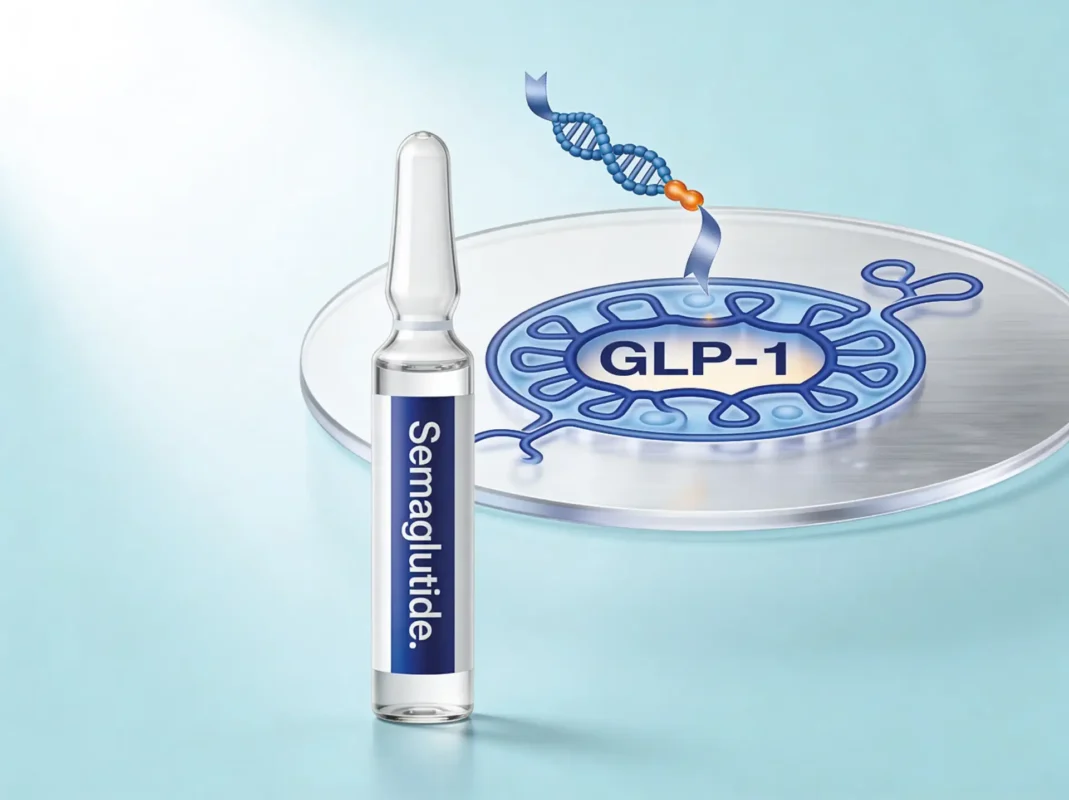
Key Takeaways
- Semaglutide is a 31-amino-acid GLP-1 receptor agonist with structural modifications that extend its half-life to approximately seven days.
- The compound has been studied across major clinical trial programs in type 2 diabetes (SUSTAIN, PIONEER), obesity (STEP), and cardiovascular outcomes (SELECT).
- Semaglutide is approved for human therapeutic use as Ozempic, Rybelsus, and Wegovy; research-grade Semaglutide is a separate product intended for laboratory research only.
- Its mechanism involves GLP-1 receptor agonism, affecting insulin secretion, glucagon suppression, gastric emptying, and central satiety signaling.
- Ongoing research extends Semaglutide's applications into neurological, renal, and substance-use disorder domains.
Semaglutide is among the most extensively studied compounds in the modern peptide research literature — a 31-amino-acid GLP-1 receptor agonist with over a decade of clinical trial data spanning metabolic, cardiovascular, neurological, and renal applications. The compound is approved for human therapeutic use under the brand names Ozempic, Rybelsus, and Wegovy, all manufactured by Novo Nordisk under pharmaceutical good manufacturing practices.
This article addresses Semaglutide as a research compound, not as a therapeutic product. Research-grade Semaglutide — lyophilized powder sold to qualified laboratories — is a distinct category from the approved pharmaceutical products and is intended exclusively for laboratory research. Below, we cover the compound’s chemistry, GLP-1 receptor mechanism, the research domains where the literature is deepest, reconstitution and storage protocols, and how to verify research-grade material before use.
What Is Semaglutide?
Semaglutide is a 31-amino-acid synthetic peptide derived from human GLP-1 (glucagon-like peptide-1), with several structural modifications that distinguish it from native GLP-1 and from earlier GLP-1 analogs. The molecular formula is C₁₈₇H₂₉₁N₄₅O₅₉, the molecular weight is approximately 4113.6 g/mol, and the CAS registry number is 910463-68-2.
Three modifications define Semaglutide’s pharmacological profile. First, the amino acid at position 8 has been substituted from alanine to α-aminoisobutyric acid (Aib), which protects the peptide from degradation by dipeptidyl peptidase-4 (DPP-4) — the enzyme that normally inactivates native GLP-1 within minutes of secretion. Second, the lysine at position 26 carries a C18 fatty diacid linker, which binds reversibly to serum albumin and extends the half-life from minutes to approximately seven days. Third, the lysine at position 34 has been substituted to arginine to prevent unintended modification at that site during synthesis.
The compound was first described in 2015 by Lau and colleagues at Novo Nordisk [Ref. 1], building on the company’s earlier work on liraglutide. A comprehensive review of the discovery and development of both compounds was published by Knudsen and Lau in 2019 [Ref. 2].
Semaglutide gained regulatory approval as Ozempic (subcutaneous, type 2 diabetes) in 2017, as Rybelsus (oral, type 2 diabetes) in 2019, and as Wegovy (subcutaneous, obesity) in 2021. Research-grade Semaglutide sold for laboratory research is the same compound chemically but is not manufactured under the pharmaceutical-grade conditions required for human therapeutic use.
Mechanism of Action
Semaglutide is a glucagon-like peptide-1 (GLP-1) receptor agonist. The GLP-1 receptor is a G-protein-coupled receptor expressed on multiple tissues, including pancreatic beta cells, pancreatic alpha cells, neurons in the hypothalamus and brainstem, gastrointestinal smooth muscle, and cardiac tissue. Endogenous GLP-1 is secreted from intestinal L cells in response to food intake but is rapidly degraded by DPP-4, giving it a native half-life of only one to two minutes. Semaglutide’s structural modifications confer DPP-4 resistance and albumin binding, producing a functional half-life approximately five orders of magnitude longer than the endogenous peptide.
The downstream effects of GLP-1 receptor activation cluster into four main categories.
Glucose-dependent insulin secretion. Activation of GLP-1 receptors on pancreatic beta cells potentiates insulin release in the presence of elevated glucose. The glucose-dependency means that GLP-1 agonists do not typically cause hypoglycemia in the absence of other glucose-lowering agents — a notable mechanistic feature.
Glucagon suppression. GLP-1 receptor activation on pancreatic alpha cells suppresses glucagon secretion, contributing to overall glycemic control.
Delayed gastric emptying. GLP-1 receptors in gastrointestinal smooth muscle slow gastric emptying, which extends the post-prandial absorption window and contributes to reduced appetite and food intake.
Central satiety signaling. GLP-1 receptors in the hypothalamus and brainstem are involved in satiety signaling. Activation reduces appetite and food intake, which underlies Semaglutide’s effects on body weight in clinical research.
A comprehensive review of GLP-1 physiology and its relevance to obesity pharmacotherapy was published by Drucker in 2022, synthesizing the receptor pharmacology and clinical evidence base [Ref. 3].
Research Applications
Semaglutide has been studied across four primary research domains, with a depth of clinical trial data unusual for compounds in the research peptide category.
Metabolic and glycemic research
The SUSTAIN trial program — comprising more than ten randomized controlled trials in type 2 diabetes — established Semaglutide’s efficacy in glycemic control and informed the regulatory approval of Ozempic in 2017. The PIONEER trial program subsequently evaluated oral Semaglutide (Rybelsus) across a similar range of comparators, including PIONEER 6, which examined cardiovascular outcomes in type 2 diabetes [Ref. 4]. Together, these trial series include data on tens of thousands of subjects and remain among the most heavily-cited clinical datasets in the GLP-1 literature.
Weight management and obesity
The STEP trial series tested Semaglutide at higher doses than the diabetes-focused trials, with body weight as the primary endpoint. Wilding and colleagues published the STEP 1 results in the New England Journal of Medicine in 2021, demonstrating approximately 15% mean body weight reduction at week 68 in subjects with overweight or obesity [Ref. 5]. The trial led to the 2021 regulatory approval of Wegovy and shifted clinical and research attention toward GLP-1 agonists as pharmacological tools for weight management.
Cardiovascular research
Semaglutide’s cardiovascular research base includes the SUSTAIN-6 trial in diabetes (2016) and the SELECT trial in non-diabetic subjects with established cardiovascular disease. Lincoff and colleagues published the SELECT results in 2023, reporting a 20% reduction in major adverse cardiovascular events in non-diabetic subjects with overweight or obesity and established cardiovascular disease [Ref. 6]. This was the first GLP-1 agonist trial to demonstrate cardiovascular benefit independent of diabetes.
Emerging applications
Beyond the established metabolic and cardiovascular indications, ongoing research is examining Semaglutide in neurological conditions (including the EVOKE and EVOKE+ trials in early Alzheimer’s disease), chronic kidney disease (the FLOW trial), steatotic liver disease, and several substance use disorders. These domains represent the leading edge of GLP-1 receptor agonist research as of 2026.
Across all four domains, research-grade Semaglutide is intended for laboratory and academic research. Clinical applications use the approved pharmaceutical products under medical supervision.
Dosing & Reconstitution for Research
Researchers working with lyophilized Semaglutide reconstitute the compound with bacteriostatic water before use. The math follows the same concentration-equals-mass-divided-by-volume principle as other research peptides, but Semaglutide’s high molecular weight (4113.6 g/mol) means that molar concentrations are substantially lower for a given mass than for smaller peptides.
A 5 mg vial reconstituted with 2 mL of bacteriostatic water yields 2.5 mg/mL — equivalent to approximately 608 nmol/mL. A 10 mg vial in 2 mL yields 5 mg/mL or approximately 1216 nmol/mL. Researchers should calculate concentrations in molar units when designing protocols that compare Semaglutide effects to those of smaller GLP-1 analogs or to native GLP-1, since equivalent mass concentrations represent very different molar quantities.
Reconstitution technique is standard: inject bacteriostatic water down the inner wall of the vial rather than directly onto the lyophilized powder, then swirl gently until dissolved. Direct injection onto powder can cause foaming and complicate concentration measurement.
Researchers can verify their concentration math against our peptide reconstitution calculator, which handles the conversion between mass and molar units automatically.
This article does not provide dosing guidance for any therapeutic indication. Semaglutide dosing for human therapeutic purposes requires medical supervision and the use of approved pharmaceutical products.
Storage & Handling
Lyophilized Semaglutide is unusually stable for a peptide of its size, due in part to the fatty acid modification that promotes self-association in the dry state. The compound is stable at room temperature during shipping but should be moved to long-term storage at -20°C (-4°F), protected from light, on receipt. Under proper lyophilized conditions, Semaglutide remains stable for 24 months or longer.
Once reconstituted, Semaglutide should be stored at 2–8°C and used within 28 days. The C18 diacid modification provides additional stability against enzymatic degradation in solution, but does not eliminate the need for proper cold storage. Repeated freeze-thaw cycles degrade peptide integrity and should be avoided.
Every vial should be visually inspected before use. The reconstituted solution should be clear and free of particulates. Cloudiness, discoloration, or visible sediment indicates degradation, and the vial should not be used in research.
For full handling protocols across the broader peptide catalog, see our storage and reconstitution guide.
Sourcing Verified Semaglutide for Research
Semaglutide is one of the most counterfeited research peptides currently in circulation. Independent testing data from grey-market suppliers regularly reveals products labeled “Semaglutide” that contain incorrect peptide sequences, related GLP-1 analogs (sometimes liraglutide or unsanctioned modifications), substantially below-labeled peptide content, or in some cases no Semaglutide at all. The economic incentive for counterfeit production is high given the compound’s per-gram value.
A credible Certificate of Analysis for Semaglutide should show three things at minimum: HPLC purity expressed as a percentage, mass spectrometry confirmation matching Semaglutide’s molecular weight of approximately 4113.6 g/mol, and an explicit distinction between peptide content and peptide mass. The mass spectrometry confirmation is particularly important here — a peak at 4113.6 Da confirms the correct compound, while a peak corresponding to liraglutide (approximately 3751 Da) or any other GLP-1 analog indicates the vial does not contain Semaglutide.
Kinetic Compounds publishes the full Certificate of Analysis for every batch of Semaglutide, with all testing performed by Janoshik Analytical, an independent third-party laboratory. Researchers can review the current batch report on the Semaglutide product page, and our broader testing methodology is documented on our lab testing and COA page.
For researchers comparing Semaglutide to other GLP-1 receptor agonists, related compounds including Tirzepatide and Retatrutide have their own glossary entries with structural and mechanistic detail. The full GLP-1 and metabolic research peptide catalog lists all related compounds with current Certificates of Analysis.
For approved pharmaceutical Semaglutide intended for human therapeutic use, researchers and clinicians should obtain Ozempic, Wegovy, or Rybelsus through regular pharmaceutical channels. Research-grade Semaglutide is not a substitute for these products in any clinical context.
Researching the GLP-1 receptor agonist class? Our complete GLP-1 and metabolic research peptide catalog covers Semaglutide, Tirzepatide, Retatrutide, and related compounds — all independently lab-tested with current Certificates of Analysis available.
Related Peptides
Related peptides will load here via PHP snippet.
Available for Research
Research Tools
Quality Promise
very batch independently tested by Janoshik Analytical. 98% purity minimum.
Frequently Asked Questions
What is Semaglutide?
<p>Semaglutide is a 31-amino-acid synthetic peptide and a GLP-1 receptor agonist. It has been extensively studied in clinical trials for type 2 diabetes (SUSTAIN, PIONEER), obesity (STEP), and cardiovascular outcomes (SELECT). It is approved for human therapeutic use as Ozempic, Rybelsus, and Wegovy.</p>
How does research-grade Semaglutide differ from Ozempic, Wegovy, and Rybelsus?
<p>Ozempic, Wegovy, and Rybelsus are pharmaceutical products manufactured by Novo Nordisk under pharmaceutical good manufacturing practices. They are produced in sterile injectable or oral formulations, packaged for clinical dosing, and intended for therapeutic use under medical supervision. Research-grade Semaglutide is the same compound chemically but is not manufactured to pharmaceutical-grade standards and is intended for laboratory research only. Anyone seeking therapeutic Semaglutide should obtain the approved products through pharmaceutical channels.</p>
What is the mechanism of Semaglutide?
<p>Semaglutide activates the GLP-1 receptor, a G-protein-coupled receptor expressed on pancreatic beta and alpha cells, hypothalamic and brainstem neurons, gastrointestinal smooth muscle, and cardiac tissue. Activation produces glucose-dependent insulin secretion, glucagon suppression, delayed gastric emptying, and central satiety signaling.</p>
Why does Semaglutide have such a long half-life?
<p>Native GLP-1 has a half-life of one to two minutes due to rapid degradation by DPP-4. Semaglutide carries two structural modifications that extend its half-life to approximately seven days: an alanine-to-Aib substitution at position 8 that resists DPP-4 cleavage, and a C18 fatty diacid linker at position 26 that binds reversibly to serum albumin and slows renal clearance.</p>
Is Semaglutide legal in Canada?
<p>Semaglutide is approved by Health Canada for human therapeutic use as Ozempic and Wegovy. Research-grade Semaglutide is legal to purchase and possess in Canada for laboratory research purposes only. Use of research-grade Semaglutide for human consumption is outside legal scope and is not supervised by Health Canada.</p>
How is Semaglutide reconstituted for research?
<p>Lyophilized Semaglutide is reconstituted with bacteriostatic water. A 5 mg vial in 2 mL of bacteriostatic water yields 2.5 mg/mL. Researchers can verify calculations using our reconstitution calculator.</p>
Where can I find a Certificate of Analysis for Semaglutide?
<p>Kinetic Compounds publishes batch-specific Certificates of Analysis from Janoshik Analytical on every Semaglutide product page. COAs can also be requested directly via research@kineticcompounds.com.</p>
References
- "Discovery of the Once-Weekly Glucagon-Like Peptide-1 (GLP-1) Analogue Semaglutide." Journal of Medicinal Chemistry, 58(18):7370-7380. — Lau J, Bloch P, Schäffer L, et al. (2015).
- "The Discovery and Development of Liraglutide and Semaglutide." Frontiers in Endocrinology, 10:155. — Knudsen LB, Lau J (2019).
- "GLP-1 physiology informs the pharmacotherapy of obesity." Molecular Metabolism, 57:101351. — Drucker DJ (2022).
- "Oral Semaglutide and Cardiovascular Outcomes in Patients with Type 2 Diabetes." New England Journal of Medicine, 381(9):841-851. — Husain M, Birkenfeld AL, Donsmark M, et al. (2019).
- "Once-Weekly Semaglutide in Adults with Overweight or Obesity." New England Journal of Medicine, 384(11):989-1002. — Wilding JPH, Batterham RL, Calanna S, et al. (2021).
- "Semaglutide and Cardiovascular Outcomes in Obesity without Diabetes." New England Journal of Medicine, 389(24):2221-2232. — Lincoff AM, Brown-Frandsen K, Colhoun HM, et al. (2023).
Continue Reading
For Research Use Only Products described on this site are intended for laboratory research purposes only. They are not approved by Health Canada for human consumption, diagnosis, treatment, or prevention of any medical condition.